
Student Spotlight
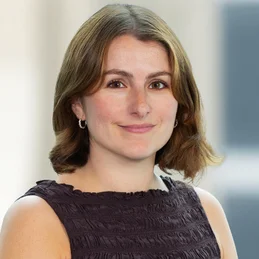
Amanda Eisenberg
Consultant , Manatt, Phelps & Phillips, LLP
Residence: New York, NY Nationality: USA
Class of 2026
Amanda Eisenberg is a New York City-based consultant at Manatt Health, where she advises health care providers, employers, unions, and other mission-driven organizations on health policy, strategic communications, stakeholder engagement, and editorial strategy. A former journalist, she is also the editorial lead for the firm’s Medicaid policy thought leadership newsletter, The 80 Million. She described her career progression and experience with the MSHLS program:
“I always knew I wanted to be a journalist and let my curiosity lead the way when it came to securing internships or pitching stories. I’ve always liked solving hard problems, and health care scratched that itch. My first job out of college had me reporting on health care IT and employer-sponsored health care, which helped solidify my beat. As I continued to grow as a journalist, my expertise spanned health care business, policy, and politics.
“I applied to the MSHLS program because I majored in journalism and history and was interested in seeking an advanced degree to better help me report on health policy. My education came from interviewing the smartest people in the industry, but I thought that an academic setting would help turbocharge that knowledge and improve the sophistication of my reporting. That plan was derailed during the Covid-19 pandemic, when I worked at Politico in New York City covering the crisis on the ground. The free time to study health care policy disappeared.
“A few years later, I left journalism to pursue a consulting role at Manatt Health, where I could leverage many skills I developed as a reporter to help advance good public health policy. I learned that Manatt’s chairperson, Bill Bernstein, taught a course in NYU’s MSHLS program and had been instrumental in its creation. The timing felt serendipitous. I wanted to deepen my understanding of the health care system so I could become a more effective communicator, and I now had an opportunity to apply what I learned in the classroom directly to my work. The program gave me another lens through which to approach the complex policy, legal and operational issues that shape health care.
“As a journalist, I was trained to ask questions, distill complicated information and make it accessible to different audiences. At Manatt, I work alongside attorneys, policy experts, and consultants to translate their insights into compelling narratives. The MSHLS program helped me build the substantive foundation to ask better questions, connect developments across different areas of health policy, and approach those conversations with greater confidence.
“For me there were particular aspects of the curriculum that were especially helpful. Health care has historically lagged other sectors in adopting new technology, but significant advancements and investments now have the potential to transform how care is delivered and accessed. Those developments also raise important questions about privacy, equity and the appropriate use of technology. I found the privacy course fascinating because it challenged me to think more critically about the intersection of innovation, regulation and patient trust. It gave me a stronger foundation for understanding the legal and ethical considerations surrounding health data, especially as artificial intelligence becomes increasingly integrated into health care. The course has informed both how I approach AI in my own work and how I evaluate emerging health technologies from a policy and communications perspective. It reinforced the importance of looking beyond what a technology can do to consider who benefits, what safeguards are needed, and how innovation might affect patients and providers.
“Knowing your ‘why’ is important. I knew I wanted to deepen my understanding of the issues I was encountering in my day-to-day work. Some of my most valuable experiences came from bringing those real-world questions into the classroom, engaging with professors and guest speakers, and building relationships with classmates whose perspectives challenged and expanded my own. My journalism background taught me the value of asking good questions, and I found that the more intentional I was about what I wanted to learn, the more I got out of the program. My advice to prospective students would be to identify what you want to take away from the experience and be proactive about seeking it out.”