
Student Spotlight
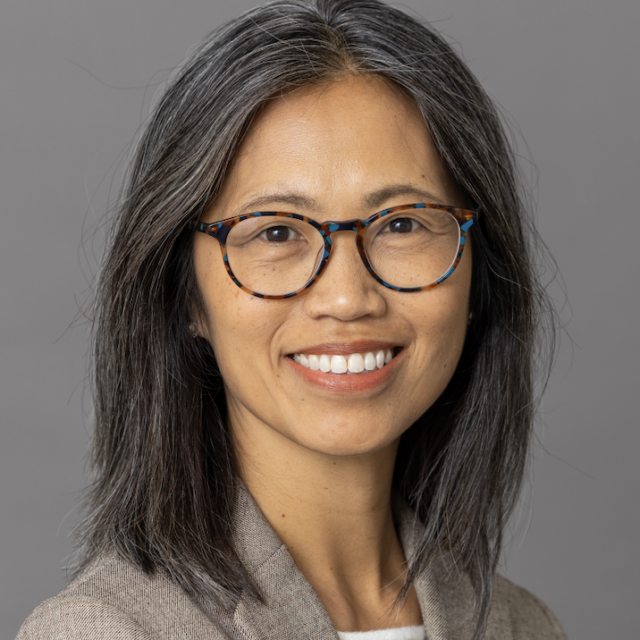
Chi Braunreiter
Medical Director , Carelon
Residence: Illinois, USA Nationality: USA
Class of 2026
For Chi Braunreiter, raised and educated in New York City, returning to NYU for the master’s program in Health Law and Strategy felt right.
A pediatric hematologist and oncologist who attended medical school at Weill Cornell Medicine, Chi now serves as a Medical Director at Carelon, a subsidiary of Elevance Health, where her work sits at the intersection of hematology and oncology, evidence-based policy, and reimbursement guidelines. In her current job, she evaluates emerging clinical literature, aligns coverage decisions with FDA guidance, and navigates the regulatory landscape of health plans across many states. “I will always carry with me the strength of the patients and their families I’ve had the privilege of serving as their physician,” she says.
“Transitioning from patient care to industry was a natural extension of my mission to address unmet needs. Scientific discoveries, such as gene therapy and immunotherapy, have significantly changed the landscape for some conditions. Having real-world experience in the payer space was a critical step in understanding how these discoveries can reach patients, within the economic constraints of the U.S. healthcare system. On the patient side, I built one-on-one relationships with children, young adults, and their families. On the industry side, I see healthcare at a population scale. My goal now is to continue to expand that lens further—to a global one.”
That goal is what brought Chi to the MSHLS program. “Pursuing another degree was a natural step. I wanted a strong foundation in the complex, decentralized, and highly fragmented U.S. healthcare system. I also knew that industry-specific skills, such as strategy, enterprise risk management, and stakeholder analysis, would strengthen the leadership skills I had developed over my 15 years in hospital and academic medical center settings.
“My research of available programs steered me toward the MSHLS. The MSHLS program is healthcare through and through. Every framework and conversation is anchored in healthcare. One of the program’s strengths is the multi-lens approach. For example, a concept such as value-based care is examined through business, legal, economic, and equity frameworks. Aside from equity, these frameworks are not taught in medical school. And yet, these are key forces that physicians must navigate to bring science to people. This is how the real-world works.
“Another strength of the program is that innovation is embedded in the year’s curriculum. From Health Economics and Strategy to the Healthcare Colloquium, we evaluate developments such as AI and digital health through a structured and comprehensive approach.
“The MSHLS program has helped me to break out of a silo, which is precisely what I wanted to achieve. The next chapter of my career is about being a bridge between science and access, between clinical care and industry, between what medicine can do and what people should receive. I’m very hopeful and optimistic about what we, as a society, can do.”